What is a neocloud? The GPU cloud companies behind the AI buildout
By Maya Koeva · September 17, 2026 · 7 min read
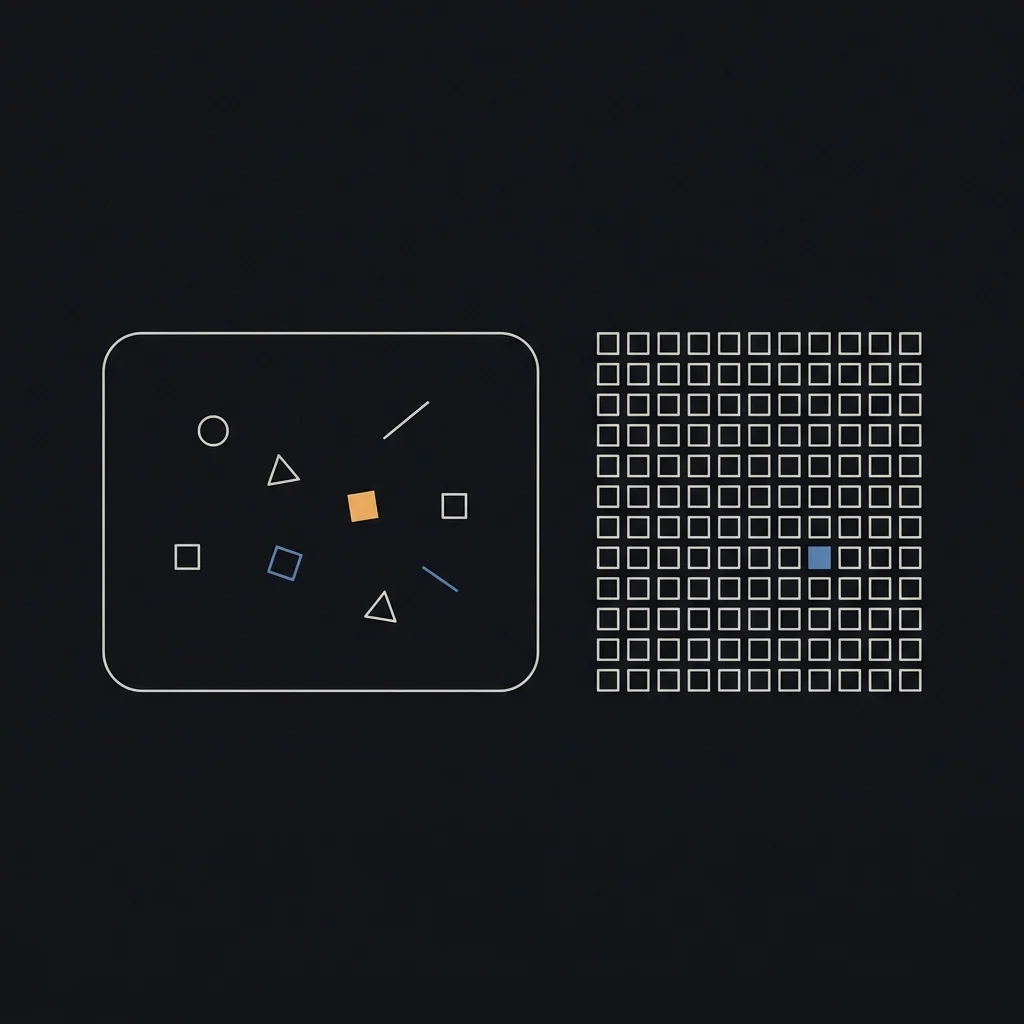
A neocloud is a cloud provider built for one job: renting out the GPUs that train and run AI models. Where Amazon Web Services, Microsoft Azure and Google Cloud sell hundreds of services to every kind of business, a neocloud sells compute for AI, by the hour or by the multi-year contract, and little else. CoreWeave and Nebius are the best-known examples.
You will also see them called GPU clouds, AI clouds or GPU-as-a-service providers. The names describe the same business.
What a neocloud is
Three things make a company a neocloud, and all three are about focus:
- The product is GPU capacity. Mostly Nvidia chips, racked, networked, cooled and rented out. Storage and software exist to keep the GPUs busy.
- The data centres are built for it. AI hardware draws far more power per rack than ordinary servers and usually needs liquid cooling. A neocloud designs the building around that.
- The customers are AI builders. AI labs, large tech companies short of capacity, and businesses training or running their own models.
The category is young and growing fast. Synergy Research Group put neocloud revenue at $9 billion in the fourth quarter of 2025, up 223% from a year earlier, and above $25 billion for the full year, with a forecast approaching $400 billion by 2031 (Synergy Research Group, April 2026). Forecasts that far out are guesses. The 2025 figures are the part to take from it.
Neocloud vs hyperscaler
A hyperscaler is one of the giant general-purpose clouds. The difference is breadth against focus:
| Hyperscaler | Neocloud | |
|---|---|---|
| Examples | AWS, Microsoft Azure, Google Cloud | CoreWeave, Nebius, Lambda, Crusoe |
| What it sells | Hundreds of services for every workload | GPU compute for AI, plus the basics around it |
| Customers | Every kind of business | AI labs, tech companies short of GPUs, AI teams |
| How it is funded | Profits from an established business | Mostly debt and customer prepayments |
| Age | Fifteen to twenty years | A few years of selling AI compute, in most cases |
The two are rivals and partners at once. Hyperscalers are among the neoclouds' largest customers, because they cannot build capacity fast enough themselves. In September 2025 Microsoft signed a contract with Nebius worth about $17.4 billion through 2031 (Nebius), and two months later a five-year, roughly $9.7 billion contract with IREN (IREN).
Neocloud companies: who they are
Neocloud companies come from three places: firms founded to do this, a spin-out of a larger tech company, and bitcoin miners that already owned what AI needs most, large sites with a lot of power.
| Public neocloud companies | Where it came from |
|---|---|
 CoreWeaveCRWV CoreWeaveCRWV | Began as a crypto miner, turned to GPU cloud, listed on Nasdaq in March 2025 |
 NebiusNBIS NebiusNBIS | Built from the international business of Yandex, based in Amsterdam |
 IRENIREN IRENIREN | Australian bitcoin miner converting its sites to AI cloud |
 Applied DigitalAPLD Applied DigitalAPLD | Builds AI data centres and leases them to neoclouds and hyperscalers |
 CipherCIFR CipherCIFR | Bitcoin miner leasing power and buildings for AI hosting |
 TeraWulfWULF TeraWulfWULF | Bitcoin miner leasing power and buildings for AI hosting |
 Core ScientificCORZ Core ScientificCORZ | Bitcoin miner hosting AI hardware for neocloud tenants |
The last four rows are a stretch of the word. A company that leases a powered building to someone else's GPUs is closer to a landlord than a cloud. Investors tend to group them with neoclouds anyway, because the same demand drives both.
Several of the largest neoclouds are private, so you cannot buy their shares yet:
| Private neocloud companies | Where it came from |
|---|---|
 LambdaPrivate LambdaPrivate | Founded as a GPU cloud for AI developers |
 CrusoePrivate CrusoePrivate | Started by powering compute with stranded energy, now builds AI campuses |
 NscalePrivate NscalePrivate | UK-based, building AI data centres in Europe |
How a neocloud makes money
There are two ways to buy from a neocloud, and they make for very different businesses.
On-demand. You rent GPUs by the hour at a published price, the way you would rent any cloud server. Prices move with supply. This is the smaller part of the business and the part that tells you most about current demand.
Contracts. A customer commits to a fixed amount of capacity at a fixed price for several years and pays whether or not it uses every hour. These take-or-pay contracts are where the large numbers come from, and they often include money up front. IREN's Microsoft contract included a 20% prepayment. The neocloud then borrows against the contract to buy the GPUs and build the site.
So the model is: sign the customer, raise the debt, build, deliver, collect for years. When it works, revenue is visible far ahead. The risks come from the same structure.
The risks that come with a neocloud stock
Debt and dilution. GPUs and data centres are paid for before they earn anything. Most of that money is borrowed, often against the GPUs themselves, and some is raised by selling new shares, which shrinks every existing holder's slice. A neocloud's balance sheet matters as much as its growth rate. Bears make this argument more than any other, with reason.
A few large customers. When one contract is worth billions, losing or renegotiating it changes the company. Check how much of the backlog comes from the top one or two names.
How long a GPU stays valuable. The debt is repaid over years, so the hardware has to keep earning for years. If new chips make old ones worthless in three years, the math breaks. If four-year-old GPUs still rent at good prices, it holds. This is an open debate, and it is worth knowing which side a bullish or bearish post is assuming.
Delivery. A contract only pays once the capacity is live. Power hookups, cooling and construction slip, and revenue slips with them.
Neocloud stocks: what the accounts we track are saying
We score the conversation around stocks by who is talking and whether they have been right before. For the neoclouds, this is how the last thirty days looked across the accounts we track, as of September 17, 2026. Graded means calls from accounts with a real track record: more than ten resolved calls, more than half of them right.
| Company | Mentions (30d) | Bull : Bear, all | Bull : Bear, graded |
|---|---|---|---|
| NebiusNBIS | 449 | 338 : 57 | 166 : 11 |
| IRENIREN | 240 | 131 : 76 | 18 : 6 |
| CoreWeaveCRWV | 46 | 25 : 19 | 14 : 1 |
| CipherCIFR | 40 | 36 : 1 | 0 : 0 |
| TeraWulfWULF | 20 | 19 : 0 | 15 : 0 |
| Applied DigitalAPLD | 10 | 10 : 0 | 8 : 0 |
Two things to read from it. Nebius is the name this group of accounts follows most closely, by a wide margin, and the graded accounts lean harder bullish than the crowd does. IREN and CoreWeave are where the crowd is split, and the bearish posts are mostly about debt and dilution, the first risk above. Small counts are small rooms: Cipher's 36 to 1 has no graded call behind it, which is a statement about our coverage and says nothing about the company.
This table is a snapshot and will age. For the ranked list with scores and prices, see the best AI infrastructure stocks, layer by layer, where the neoclouds sit beside the servers, optics and power names.
Check a neocloud stock before you buy it
Pick Nebius, CoreWeave or IREN and open it in Quantral. You get today's score, the calls behind it, and the record of every account that made one, bears included. It takes a minute and the trial is free.


How to research a neocloud stock
The usual checks apply, and how to research stocks walks through them. Five questions are specific to this business:
- How much revenue is contracted, and for how long? Look for the backlog or remaining performance obligations figure in the filings.
- Who are the top customers, and what share are they?
- How much power is secured, and how much is live? Megawatts under contract is the capacity ceiling. Megawatts energised is what earns today.
- What does the debt cost, and when is it due?
- Who is making the case, and what is their record? A thesis on a neocloud is a thesis about demand years out. Weigh it by whether the person has been right before, which is what a credibility score measures.
Then write down the bull case and the bear case in a sentence each. For most neoclouds they are the same sentence read two ways: demand for AI compute will outrun the money borrowed to serve it, or it will not.
Where Quantral fits
Quantral tracks what finance accounts on X, Reddit and elsewhere say about public companies, grades those accounts on their past calls, and turns the conversation into a score per stock. Neoclouds are one of the most discussed corners of what we cover, so the app is a quick way to see who is bullish or bearish on a given name and how their earlier calls worked out. It does not tell you what a neocloud is worth. Pair it with the filings.
The bottom line
A neocloud is a cloud company that rents out GPUs for AI and little else. The public ones are CoreWeave, Nebius and IREN, with a ring of data-centre landlords and former bitcoin miners around them. The business is simple to describe, sign long contracts, borrow, build, deliver, and the stock question is usually the same one: whether demand lasts longer than the debt.
Mention counts and splits cover the accounts Quantral tracks for the 30 days to September 17, 2026, and are a dated snapshot. Company descriptions are summaries from public sources and company announcements. Quantral surfaces signals and context from public sources to support your own research. Nothing here is financial advice or a recommendation to buy or sell.