Who is Kevin Xu? The trader behind Sir Jack A Lot
By Maya Koeva · September 3, 2026 · 5 min read
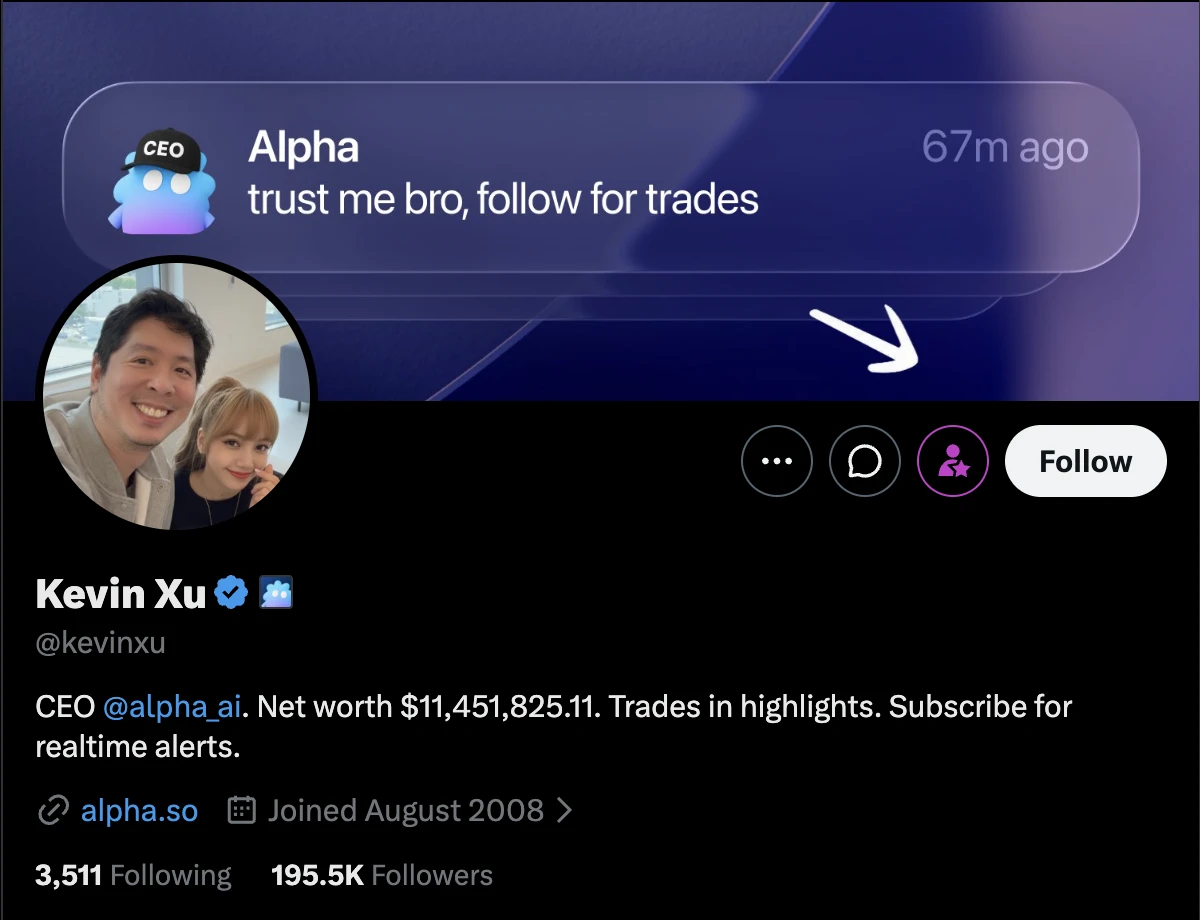
Search for Kevin Xu and you will find a Polaris Capital analyst, a newsletter writer, and a biotech executive. The one people in retail trading mean is @kevinxu: the trader who ran a $35,000 retirement account to $8 million during the pandemic, posted every trade on r/wallstreetbets under the name Sir Jack A Lot with full dollar amounts attached, and then founded a startup built on the idea that nobody should have to take a screenshot on faith. He is not one of the accounts Quantral tracks and grades, so this is not a profile in our graded-voice series. It is the public record of the most famous room-reader retail trading has produced, and it is the best argument we know for the thing this blog does: grading the record instead of trusting the legend.
From a 2010 Reddit account to the front page
Xu worked at Google and Stripe before trading made him famous. He has told the origin story himself: early in the pandemic, sitting on real gains, he saw a WallStreetBets post bragging about 20x in four years, revived a Reddit account he had registered back in 2010, and answered with his own 20x in four months. The post hit the subreddit's front page and Sir Jack A Lot became a recurring character in the memestock era, one of the few large accounts posting entries, exits, and position sizes as they happened rather than after the fact. He went on to create the r/RaceTo10Million subreddit, and Forbes confirmed his identity in 2023.
The style behind the number, per his own accounting of it: concentrated swing trades in single names with a near-term catalyst, rotating out after a 20 to 30 percent move, no margin, no options, no crypto. He describes reading sentiment rather than building models, and says he has never run a discounted cash flow in his life. His line for the approach is "concentration makes wealth, diversification keeps it," and he now keeps the bulk of the money in index funds.
The record, in public
The legend held up because so much of it was checkable. The famous trades come with amounts and dates:
| Trade | What happened |
|---|---|
| Big 5 Sporting Goods | Put roughly $6M into the small-cap retailer, about 1.5% of the company, and cleared about $1.7M |
| GameStop | Bought $1.3M at about $13 in October 2020, sold in December, weeks before the squeeze that would have turned it into $30M or more |
| Rocket Companies | Made about $1M and gave it back the next day during the 2021 spike |
| Slack | Took a roughly $200K loss before the Salesforce acquisition |
The GameStop row is the one to sit with. The most celebrated sentiment trader of the era owned the defining sentiment trade of the century three months early, at $13, in size, and sold before the part that made it famous. He read the room correctly and still missed the move everyone remembers. A real record holds a hot streak and a miss that size in the same account, and this one survives only because he posted the trades while they were open.
There is also a prequel with the opposite lesson. In 2017 he turned $8,000 into about $300,000 trading Ethereum and altcoins, lost nearly all of it in the 2018 crash, and still owed about $150,000 in taxes on the gains. The discipline in the stock run, the no-margin rule, the rotation out at 20 to 30 percent, reads like a system built by someone who had already been on the wrong side of a mania once.
The screenshot problem
WallStreetBets in 2021 minted legends faster than anyone could check them, and some were fake. Xu has described watching a popular user get caught posting doctored gains, and he turned his answer into a company: AfterHour, launched in 2022, raised a $4.5M seed led by Founders Fund and General Catalyst, and now operates as Alpha AI. The product connects to users' real brokerage accounts so that positions shown in the feed are verified, while the users themselves stay pseudonymous. His thesis, in his own words: "pseudonymous but verified is the best combination."
Quantral attacks the same problem from the other direction. Alpha verifies the positions behind a username; we grade the public calls a voice already made, over fixed windows, and publish the hit rate. Both exist because the default unit of finance social media, a confident post with no attached record, cannot be checked, and because the voices most worth following keep agreeing to be checked anyway. Xu posted his dollar amounts unprompted for years. The best accounts we track keep posting through their losing streaks.
What his old room grades like
Our own data adds one scoped number to the story. We ran more than 6,000 gradeable r/wallstreetbets calls through the same scoring we use on every voice we track, and the crowd landed at 45 percent, a hair worse than a coin flip; the full grading is here. Xu is the existence proof that a disciplined individual can read that same room and win. Neither fact cancels the other, and together they are the whole case for grading: a room carries real information about where attention and conviction are moving, most individual claims inside it do not deserve your money, and the work is telling one from the other, name by name, call by call.
That is the reason this piece carries no graded table for Xu himself. His famous run predates our tracking, his verified positions live inside his own product, and we do not grade what we cannot observe as public, tickered calls. Where he does show up checkable, we linked it. That restraint is the method: how a track record is graded covers what qualifies and why.
Check the record
The durable thing about Kevin Xu is the habit that made the $8 million believable: he attached receipts before anyone asked. He still does; the X bio states his net worth to the cent. If you follow voices for stock ideas, that is the standard to hold them to. The accounts we track are on the accuracy board with their graded records next to their names, and the live version updates in the Quantral app as calls resolve. Check the record before you check the follower count.
Kevin Xu is not an account Quantral tracks or grades; nothing here reflects our scoring. Biographical facts, trade amounts, and company details are drawn from the linked public sources (TechCrunch, Forbes, IBTimes UK, Mixpanel, Yahoo Finance) and from his own public statements, as published. The r/wallstreetbets figures are from our June 2026 grading, linked above. Quantral surfaces signals and context from public sources to support your own research. Nothing here is financial advice or a recommendation to buy, sell, or follow anyone. Past performance is not indicative of future results.