Tax loss harvesting: how it works, the rules, and the 2026 deadline
By Maya Koeva · October 19, 2026 · 14 min read
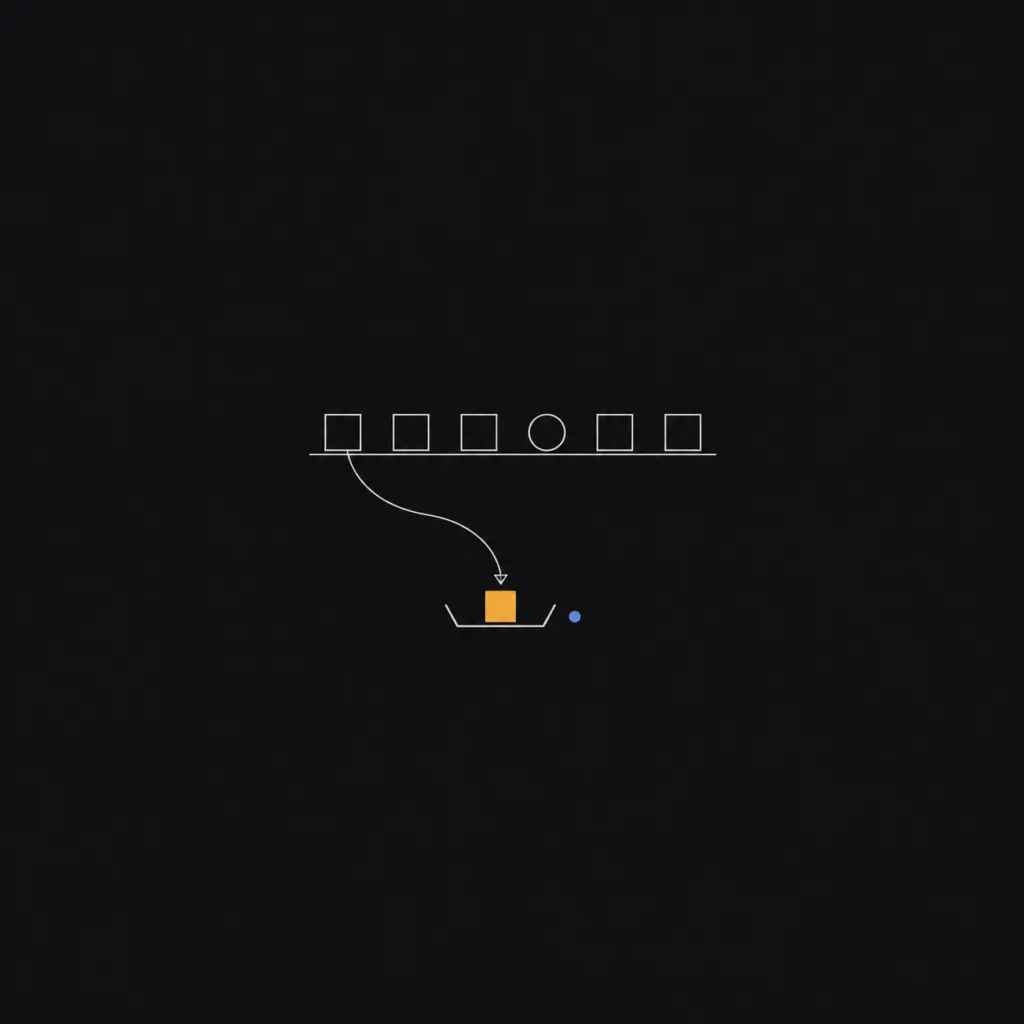
Tax loss harvesting means selling an investment that is worth less than you paid for it, so the loss cancels out capital gains you made elsewhere. If your losses beat your gains, up to $3,000 of the difference comes off your ordinary income, and the rest carries forward to future years. Many investors who harvest buy a similar investment straight away so their money stays in the market.
To count for 2026, the sale has to happen by Thursday, December 31, 2026, the last trading day of the year. The trade date counts, not the settlement date a few days later in January.
This page covers US federal rules. Other countries have their own rules, and the UK, for example, has its own 30-day rule for buying shares back.
How tax loss harvesting works: a worked example
Say you sold a stock this year for a $10,000 long-term gain. You also hold a fund that is now $6,000 below what you paid. If you sell the fund before the year ends, the two net against each other.
| Without harvesting | With harvesting | |
|---|---|---|
| Long-term gain from the stock you sold | $10,000 | $10,000 |
| Loss from selling the fund | $0 | −$6,000 |
| Net gain you pay tax on | $10,000 | $4,000 |
| Tax at a 15% long-term rate | $1,500 | $600 |
The harvest cuts this year's bill by $900. The numbers are illustrative: your rate depends on your income, and state taxes come on top.
Buying a replacement fund at today's lower price also lowers your cost basis (what you paid, for tax purposes), so a future sale shows a bigger gain. In most cases harvesting defers tax rather than erasing it. It cuts your lifetime tax bill when:
- the loss offsets short-term gains, which are taxed at your ordinary income rate (10% to 37%), while the gain you defer is later taxed at the lower long-term rate;
- the loss offsets up to $3,000 of ordinary income;
- you expect to be in a lower bracket when you sell, for example in retirement.
Tax loss harvesting rules
The rules below come from IRS Publication 550 and Topic 409:
- Taxable accounts only. Losses inside an IRA, a 401(k) or another retirement plan cannot be harvested. Those accounts are already sheltered.
- Short-term or long-term. Anything held one year or less is short-term. Anything held more than one year is long-term.
- Netting order. Short-term losses offset short-term gains first, and long-term losses offset long-term gains. Then the two results combine into one net gain or loss for the year.
- $3,000 a year against ordinary income. If losses still win after netting, you can deduct up to $3,000 of the net loss from other income ($1,500 if you are married and file separately).
- Unlimited carryforward. Anything above that limit carries into later years with no expiry, and it keeps its short-term or long-term character.
An example of the last two rules: you harvest $15,000 of losses in a year with $10,000 of gains. The $5,000 net loss lets you deduct $3,000 from your 2026 income and carry $2,000 into 2027.
| Step | What nets against what |
|---|---|
| 1 | Short-term losses against short-term gains |
| 2 | Long-term losses against long-term gains |
| 3 | The two results against each other |
| 4 | Up to $3,000 of any remaining net loss against ordinary income |
| 5 | The rest carries forward to next year |
For 2026, long-term gains are taxed at 0%, 15% or 20%. The 0% rate applies while taxable income stays at or below $49,450 for single filers and $98,900 for married couples filing jointly, per the IRS's 2026 inflation adjustments.
The wash sale rule
The wash sale rule stops you from selling at a loss and buying straight back in. If you buy the same or a "substantially identical" security within 30 days before or 30 days after the sale, the IRS disallows the loss. Counting the day of the sale, that makes a 61-day window.
According to Publication 550, any of these within the window counts as a wash sale:
- buying substantially identical stock or securities;
- acquiring a contract or option to buy them;
- buying them in your IRA or Roth IRA;
- your spouse, or a corporation you control, buying them.
The rule counts purchases before the sale too. If you bought more shares in the 30 days before the sale, through a recurring purchase or an automatic dividend reinvestment, part of the loss can be washed. People who invest on a schedule with dollar-cost averaging often pause the automatic buys in that one holding around a harvest.
What happens to a washed loss
A washed loss moves into the new shares. You add the disallowed loss to the cost of the replacement, and the holding period of the old shares carries over too. Using numbers like the IRS's own example:
- You buy 100 shares for $5,000 and sell them for $3,500, a $1,500 loss.
- Within 30 days you buy 100 shares of the same stock for $3,700.
- The $1,500 loss is disallowed. Your basis in the new shares becomes $3,700 + $1,500 = $5,200, so you claim the loss later, when you sell those shares.
The IRA case is harsher. If the repurchase happens inside your IRA or Roth IRA, the basis adjustment does not apply, so the loss disappears for good (Revenue Ruling 2008-5).
What "substantially identical" means
The IRS weighs the facts in each case and has never published a simple test. Its guidance says the stock of one company, as a rule, is not substantially identical to the stock of another. For funds there is no ruling at all. Two S&P 500 index funds from different providers hold the same companies in the same weights, which is why the cautious swap is a fund that tracks a different index, such as a total US market fund in place of an S&P 500 fund.
You stay invested with that swap: sell the loser, buy something that moves in a similar way but is not the same security, and either keep the replacement or switch back after 31 days.
Your broker will not catch every wash sale
Brokers have to report a wash sale when the sale and the repurchase happen in the same account and involve the same security. A repurchase in a second brokerage account, your IRA or your spouse's account still counts, and tracking it is up to you.
Tax loss harvesting deadline 2026
| Date | NYSE & Nasdaq | What it means for harvesting |
|---|---|---|
| Nov 27, 2026Friday | Closes 1pm | Black Friday short session |
| Dec 1, 2026Tuesday | Open | Start of the wash sale look-back for a December 31 sale |
| Dec 24, 2026Thursday | Closes 1pm | Christmas Eve short session |
| Dec 25, 2026Friday | Closed | Christmas |
| Dec 31, 2026Thursday | Open | Last trading day: last chance to harvest a 2026 loss |
| Jan 1, 2027Friday | Closed | New Year's Day |
| Feb 1, 2027Monday | Open | First trading day outside the window for a December 31 sale |
Trade date, not settlement date. US stock trades settle one business day after the trade, so a sale on Thursday, December 31 settles on Monday, January 4, 2027. Publication 550 says to report a sale in the year of the trade date, so that loss belongs to 2026.
A few practical points:
- Mutual funds price once a day. An order placed after the fund's cutoff on December 31 gets the next trading day's price, which lands the sale in 2027. Check your broker's cutoff time.
- Do not leave it to the last session. Volume drops in holiday weeks, and spreads on smaller stocks can widen. The full list of closures is on the stock market holiday calendar.
- Count the window both ways. For a sale on December 31, any purchase from December 1, 2026 to January 30, 2027 can trigger the wash sale rule. January 30 is a Saturday, so Monday, February 1 is the first trading day you can buy the same security back.
When tax loss harvesting does not help
Harvesting is not free, and in some years it does nothing for you:
- You are in the 0% long-term bracket. If your long-term gains are already taxed at 0%, using a loss against them saves nothing. Some investors in that bracket do the reverse, selling winners to reset their basis higher at no tax cost.
- The money is in a retirement account. IRA and 401(k) losses have no tax effect.
- The loss is small. Trading costs, spreads and the paperwork can eat a loss of a few hundred dollars.
- You sit in cash. If you sell and wait 31 days to buy back, you can miss a rebound, and the first weeks of January have a history of sharp moves in beaten-down small stocks.
- The lower basis catches up with you. If you expect a higher tax rate later, deferring tax to that later year can cost more than it saves.
Robo-advisors, direct indexing and Fidelity
Robo-advisors such as Betterment and Wealthfront harvest for you: software checks your holdings for losses, sells the losing fund, and buys a similar one in its place. You get the benefit without counting days, but the software only sees the accounts it manages, so purchases elsewhere can still wash a loss.
Direct indexing tax loss harvesting takes the idea further. Instead of buying an index fund, you own the index's individual stocks in your own account. Even in a year when the index rises, some of its members fall, and each one is a loss you can harvest while the rest of the portfolio keeps tracking the index. The trade-offs: higher fees than an index ETF, account minimums, a portfolio that drifts a little from the index, and fewer losses to harvest as the account ages, because the stocks that rise end up with large built-in gains.
Fidelity tax loss harvesting comes in two forms. Fidelity Managed FidFolios, Fidelity's direct indexing account, includes automated tax-loss harvesting for a yearly advisory fee. In a regular Fidelity brokerage account you harvest by hand, and choosing which tax lots to sell (the shares you paid the most for) gets the largest loss out of a sale. Check Fidelity's site for current minimums and fees.
December tax-loss selling and the stocks the crowd gave up on
Year-end harvesting by many investors at once moves prices. Every December a wave of selling hits the year's biggest losers, and some of the price weakness late in the year comes from investors booking losses rather than from news about the companies. Once the selling ends, those stocks have tended to bounce, which is one explanation for the January effect, the old pattern of small caps beating large caps in January. The pattern has faded: small caps won only 4 of the last 11 Januaries.
A beaten-down stock heading into December can be a company the market has given up on for good reasons, or a decent business caught in a bad year. Price alone cannot tell you which. You can at least read what people are saying about it.
Here are much-discussed stocks with some of the biggest 2026 losses so far, and how bullish the accounts we track were on each over the last 30 days:
| Stock | 2026 so far | Bullish share, last 30 days |
|---|---|---|
 Eos EnergyEOSE | 84.1% | 55% |
| OkloOKLO | 61.0% | 4% |
| AppLovinAPP | 60.5% | 72% |
| KlarnaKLAR | 55.0% | 60% |
 CrowdStrikeCRWD | 51.5% | 75% |
 SoFiSOFI | 44.4% | 50% |
 AST SpaceMobileASTS | 44.0% | 57% |
 NikeNKE | 41.7% | 24% |
 Cipher DigitalCIFR | 39.2% | 76% |
Price change runs from the close on December 31, 2025 to the close on October 16, 2026. Bullish share is bullish mentions as a share of all bullish and bearish mentions from September 17 to October 16.
All nine have lost at least 39% this year, and the rooms around them split two ways. CrowdStrike, Cipher Digital and AppLovin are down 39% to 61% and the accounts we track are still about three to one bullish. Oklo and Nike sit at the other end: only 4% of the directional mentions of Oklo were bullish, and bearish posts outnumber bullish ones on Nike about three to one.
Neither reading tells you what to do. A room that is still bullish can be wrong all the way down, and a stock the room has given up on can be a turnaround in waiting. Read the bearish posts on a loser you hold and sort them by reason:
- About the price ("it keeps falling", "dead money", "I'm out for taxes"). These describe the mood around the stock, and December selling can make that mood worse.
- About the business (a guidance cut, a lost customer, a failed product, cash running low). This is a thesis problem, and a January bounce does not fix it.
Keep the tax decision and the investment decision apart. Harvesting is a tax question. Owning the company is a research question, and the sentiment breakdown guide shows how to read who is saying what. If you would still buy the stock today, people often harvest the loss and hold something similar for 31 days. If you would not, the loss is the cost of a sale you wanted to make anyway.
What tax loss harvesting means for long-term investors
For a long-term investor, harvesting is housekeeping. For most people it is a once-a-year check, in a taxable account, on a holding that has fallen well below what you paid, with a replacement lined up that keeps your mix of investments the same.
A harvest can also turn into a market-timing bet. Selling a fund for the tax loss and then waiting in cash for a better entry is a different decision with a different risk, and a missed rally can cost more than the tax saving.
Common questions
What is tax loss harvesting?
Tax loss harvesting is selling an investment at a loss to offset capital gains, and up to $3,000 a year of ordinary income, on your taxes. Many investors buy a similar investment right away so they stay invested.
How does tax loss harvesting work?
You sell a holding worth less than you paid. The loss nets first against gains of the same type (short-term or long-term), then against the other type, then against up to $3,000 of ordinary income. Anything left carries forward to future years with no time limit.
What are the tax loss harvesting rules?
The sale must be in a taxable account and happen by the last trading day of the year. Short-term losses offset short-term gains first and long-term losses offset long-term gains. Net losses can reduce ordinary income by up to $3,000 a year ($1,500 married filing separately), the rest carries forward, and the wash sale rule bars buying the same or a substantially identical security within 30 days before or after the sale.
What is the wash sale rule?
The wash sale rule disallows a loss if you, your spouse, a corporation you control or your IRA buys the same or a substantially identical security within 30 days before or after you sell at a loss. You add the disallowed loss to the cost basis of the new shares, except when the purchase was in an IRA, where the loss is gone for good.
What is the deadline for tax loss harvesting in 2026?
The sale must happen by Thursday, December 31, 2026, the last trading day of the year. The trade date counts, so a December 31 sale settles in January 2027 but still belongs to 2026.
How much can you write off with tax loss harvesting?
Losses offset any amount of capital gains. Beyond that, up to $3,000 a year of net loss comes off ordinary income, or $1,500 if you are married and file separately. Unused losses carry forward with no time limit.
Can I buy the same stock back after tax loss harvesting?
Yes, once the wash sale window has passed: wait until the 31st day after the sale. For a sale on December 31, 2026, that is Monday, February 1, 2027, the first trading day after the window closes.
Can you tax loss harvest in an IRA or 401(k)?
No. Gains and losses inside retirement accounts have no tax effect, so there is nothing to harvest. An IRA purchase can still wash a loss you take in a taxable account.
Does Fidelity do tax loss harvesting?
Fidelity's direct indexing account, Fidelity Managed FidFolios, harvests losses for you for an advisory fee. In a regular Fidelity brokerage account you harvest yourself by selling specific tax lots at a loss.
Is tax loss harvesting worth it?
It is worth most when you have short-term gains to offset, a large loss, and a high tax bracket. It is worth little or nothing if you are in the 0% long-term bracket, if the loss is small next to the trading costs, or if the money sits in a retirement account.
Tax rules: IRS Publication 550 (2025), Investment Income and Expenses (wash sales, netting, capital loss limit and carryover, trade date); IRS Topic 409, Capital Gains and Losses (holding periods, $3,000 limit); Revenue Procedure 2025-32 (2026 capital gain rate thresholds); Revenue Ruling 2008-5 (IRA purchases); Instructions for Form 1099-B (broker wash sale reporting). Market dates follow the NYSE 2026 holiday calendar. Price changes use daily closes; mention data covers the accounts Quantral tracks. This page explains general US federal rules and is not tax advice: your situation may differ, so talk to a tax professional before you act. Nothing here is financial advice or a recommendation to buy or sell.